

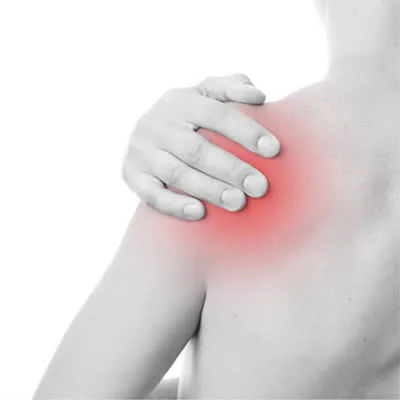
The main shoulder joint is a ball-and-socket joint supported by the rotator cuff muscles. Movement also depends on the shoulder blade, collarbone, upper back and neck. Pain felt at the shoulder can therefore arise locally or be referred from nearby structures.
Rotator cuff-related pain
The rotator cuff tendons help centre and control the shoulder during movement. Pain can develop after repeated overhead work or sport, a sudden increase in activity or an injury. Symptoms are often felt on the outer upper arm and may be aggravated by lifting or lying on that side.
The term “impingement” has often been used for this presentation. Current management focuses less on a structure being permanently trapped and more on restoring movement, capacity and confidence through appropriate loading.
Tendinopathy and bursitis
Tendinopathy describes a painful tendon that is not tolerating its current load. Bursitis involves irritation of a fluid-filled structure that helps reduce friction. They can occur together and may produce similar symptoms. Exercise is normally progressed gradually rather than avoided indefinitely.
Frozen shoulder
Frozen shoulder causes a marked loss of both active and passive movement, often with substantial pain in the earlier stage. It can develop without a clear injury and is more common in people with diabetes. Recovery is usually slow, and the plan should respect the stage of the condition. A medical assessment can help confirm the diagnosis and discuss additional options.
Instability and traumatic injury
Instability may follow a dislocation, repeated sporting strain or naturally more flexible joints. A recent dislocation, suspected fracture or sudden inability to lift the arm needs prompt medical assessment. Later rehabilitation aims to rebuild control and strength for the person’s usual activities.
Assessment and care
We assess neck and shoulder movement, strength and relevant orthopaedic or neurological signs. When appropriate, care may include joint and soft-tissue techniques alongside an individual exercise programme. Advice is based on the demands of work, sleep, home life or sport rather than a one-size-fits-all posture rule.